
Wind shadows
Where islands, hills and buildings take the breeze away — and how far downwind the hole runs.
CFD Modelling
Forecast models tell you which breeze is coming. Squall works out what your venue does to it — hill by hill, shore by shore — and shows you the result across the race area.
One number vs the whole venue
Global forecast models work on grid cells roughly 9 to 25 km across. To them, this whole stretch of San Francisco Bay is one or two numbers. On the water it's a jet, a wind shadow, a strait that accelerates and a shore that goes soft.
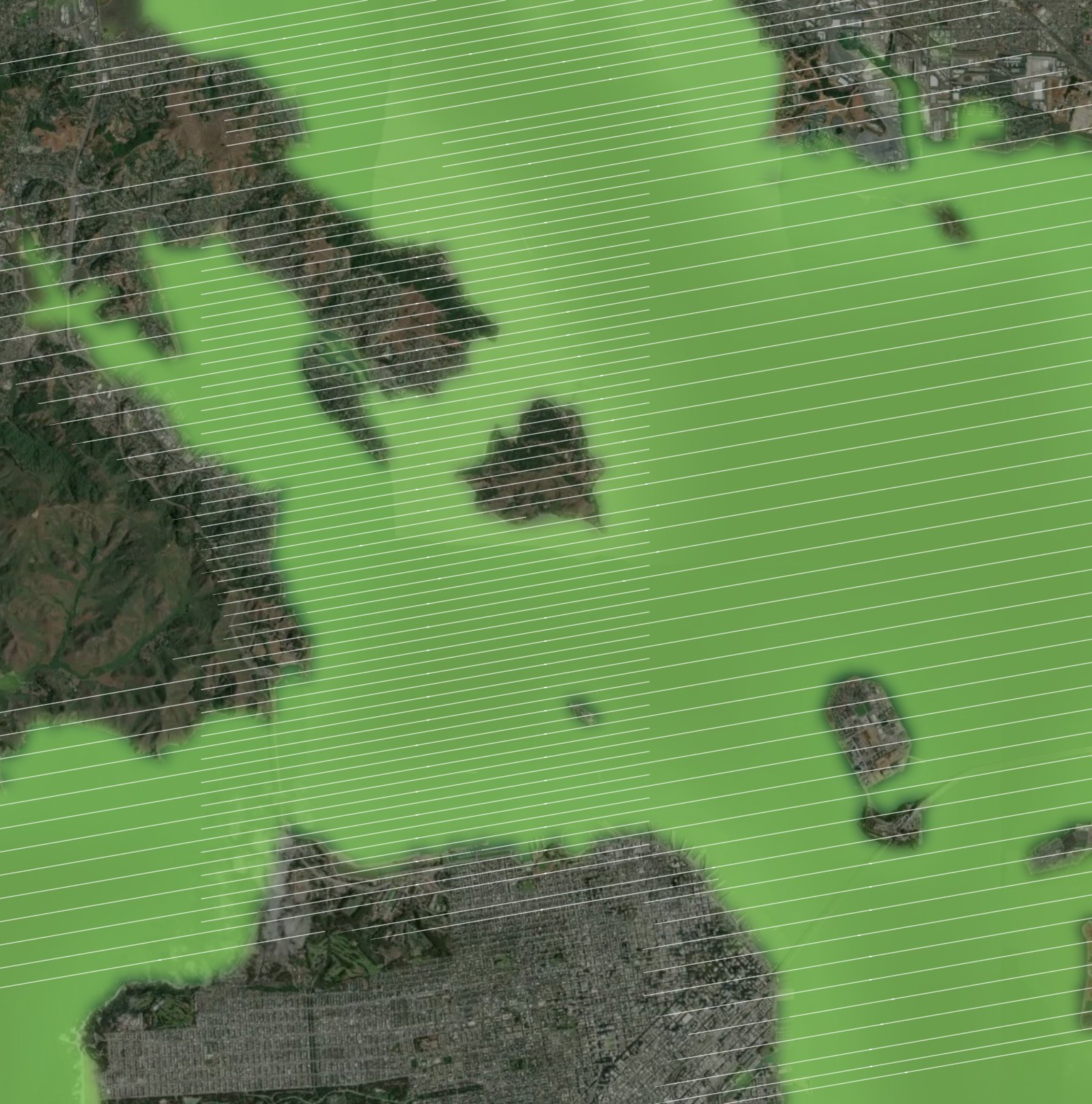 Generic forecast
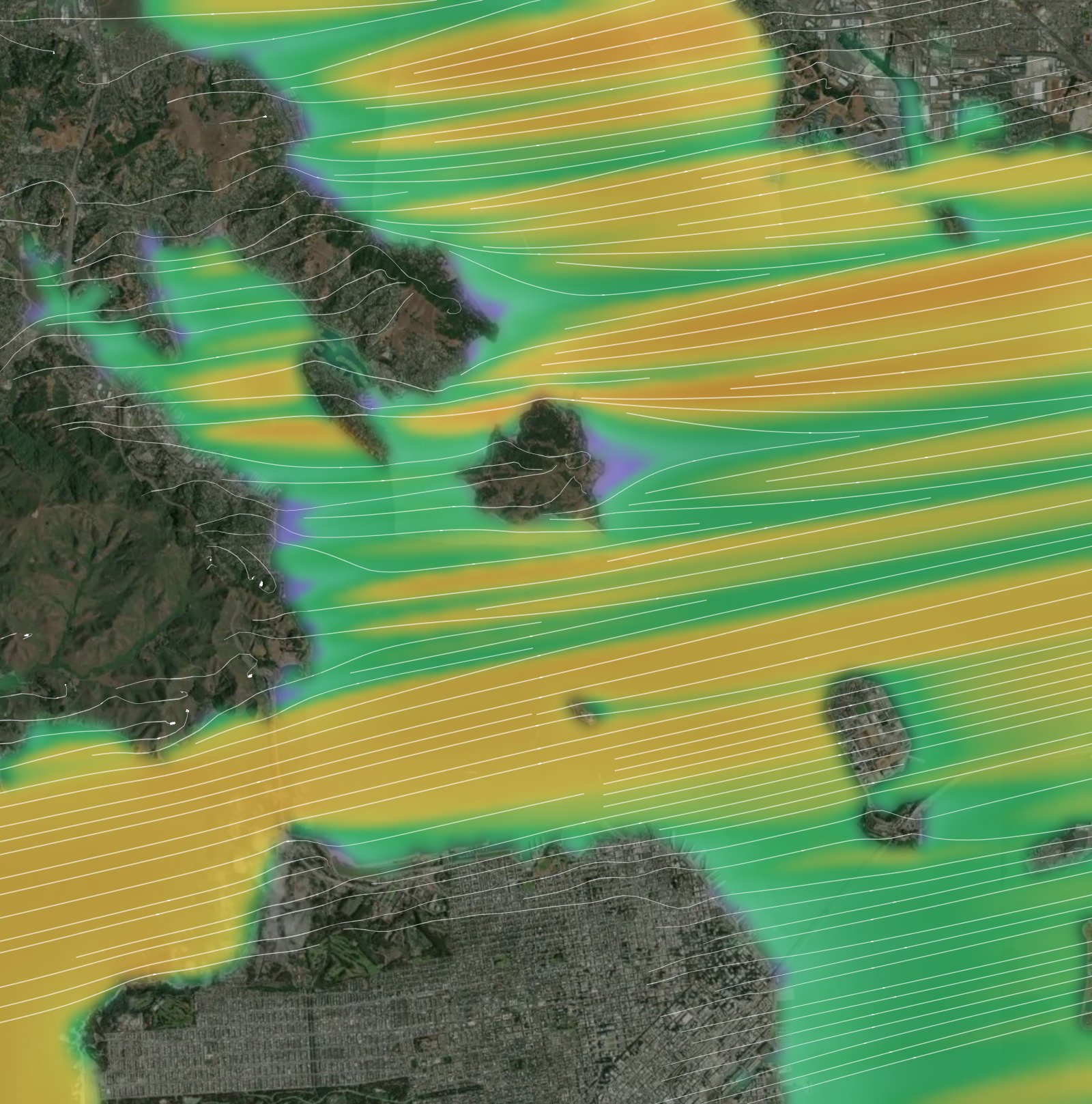 Gate jetAngel Island wind shadowRaccoon StraitSausalito shelter
How a venue is built
A detailed elevation model of the hills, cliffs and shoreline around the venue, with land and water treated as the different surfaces they are.
Computational fluid dynamics — the same family of methods used to design sails and race cars — solves the flow over that terrain on a mesh of millions of cells, for every direction the wind can blow.
Leading global and regional models are blended for the venue, weighted by how well each has done there. The solved pattern for the day's direction is scaled to the day's breeze, hour by hour.
Buoys and stations near the course keep it honest: the forecast is calibrated to them, gusts are learned from them, and live readings nudge the next few hours.
What it shows you
Where islands, hills and buildings take the breeze away — and how far downwind the hole runs.
Gaps, straits and headlands that squeeze the flow into lanes of extra pressure.
How the breeze turns as it follows a shoreline or spills over a ridge — the shifts you'll sail through.
The wind from 2 m to 30 m above the water, so you read it where your sail is — dinghy or big boat.
Both halves. The forecast models say which breeze is coming and when. The venue model says what your water does to that breeze. Squall puts them together for every hour of the day.
At flagship venues today, with more solved each season. Every other venue gets the terrain-shaped model, blended forecasts and local calibration.